
How a Social Media Management Agency Helps Your Business Grow

Social media plays an important role in how people discover, research and interact with businesses. Platforms such as Instagram, Facebook and LinkedIn give brands an opportunity to connect directly with their audience, showcase their services and build trust over time. However, creating an account and posting occasionally is not enough to achieve meaningful results. A successful social media presence requires regular content, a clear plan, active audience engagement and ongoing performance review. This is where a professional social media management agency can help. By managing your social media activities strategically and consistently, an agency allows you to stay visible online while focusing on the daily needs of your business. What Is Social Media Management? Social media management covers the complete process of managing a brand’s presence across social platforms. This may include: Planning content and campaigns. Creating graphics, captions, videos and reels. Scheduling and publishing posts. Responding to comments and messages. Monitoring brand mentions and audience reactions. Reviewing performance and improving future content. Professional social media management brings these activities together in one organised process. Rather than publishing random posts, businesses can share content that supports their brand, communicates their value and contributes to their wider marketing goals. Why Does Your Business Need Social Media Management? Managing several social media accounts can take more time and planning than many business owners expect. Each platform has a different audience, format and style of communication. For example, LinkedIn content may focus on industry knowledge, company updates and professional insights. Instagram, on the other hand, may rely more heavily on reels, visuals, stories and interactive posts. A social media management agency helps businesses adapt their content to each platform while keeping their overall branding consistent. Build a Consistent Brand Presence Customers should be able to recognise your business wherever they find it online. Consistent colours, visual styles, messaging and tone of voice help create a stronger brand identity. An experienced social media team makes sure that each post suits its platform while still reflecting the same brand. This helps your business appear more professional and reliable. Create Content With a Clear Purpose Every social media post should have a purpose. For instance, some posts can educate your audience, while others may answer questions, introduce services or share useful information. A professional team can create a balanced content plan that includes: Educational posts. Service-related content. Customer frequently asked questions. Reels and short-form videos. Carousels and graphics. Behind-the-scenes updates. Polls and other interactive content. This approach is more effective than posting simply to keep an account active.. Reach the Right Audience A large number of followers does not necessarily lead to business growth. What matters is reaching people who are genuinely interested in your products or services. Understanding your audience helps determine: Which platforms deserve the most attention. What topics are likely to interest your customers. Which content formats to use. What type of language will connect with your audience. Which calls to action are most appropriate. This is particularly valuable for small businesses, where marketing time and resources need to be used carefully. Improve Audience Engagement Social media is not just a place to publish advertisements. It is also a direct communication channel between your business and its customers. Comments, messages, questions and mentions give you opportunities to build relationships and understand what people need. Community management helps ensure that these interactions do not go unnoticed. Audience feedback can also reveal common concerns, frequently asked questions and new ideas for future content. Make Better Decisions With Analytics Creating and publishing content is only part of the process. Businesses also need to understand what is working and where there is room for improvement. Useful performance indicators may include: Reach and impressions. Likes, comments and shares. Saves and video views. Link clicks. Profile visits. Direct messages and enquiries. Leads generated through social media. These insights help businesses make decisions based on actual audience behaviour rather than assumptions. A well-managed social media strategy follows a continuous cycle: Plan → Create → Publish → Measure → Improve Over time, this process helps businesses refine their content and focus on the activities that deliver the strongest results. How MPRS Manages Your Social Media At MPRS Office Management Services, we begin by learning about your business, target audience and objectives. This allows us to create a social media plan that supports your specific needs rather than applying the same approach to every client. Our process includes: Brand Audit and Strategy We review your existing social media presence, branding, target audience, competitors and marketing goals. Based on this review, we identify opportunities and develop a practical strategy. Content Planning We prepare a structured content calendar with relevant topics, post formats and campaign ideas. This gives your social media activity direction and helps maintain a steady publishing schedule. Content Creation and Publishing Our team creates captions, graphics, reels and other social media content in line with your brand identity. Once content is approved, we schedule and publish it on the appropriate platforms. Community Management and Analysis We monitor comments, messages and other audience interactions. We also review content performance to understand what is attracting attention and where adjustments may be needed. This organised approach ensures that your social media activity supports your business goals instead of treating each post as a separate task. Build a Stronger Social Media Presence With MPRS Successful social media management is not about posting as frequently as possible. It is about sharing useful content consistently, communicating with the right audience and improving your approach based on performance. MPRS Office Management Services provides professional social media management services, including: Content creation. Post scheduling. Audience engagement. Campaign management. Brand strategy. Performance analysis. Whether you are setting up your social media presence or trying to improve your existing accounts, our team can help you create a more consistent and organised approach. Ready to strengthen your social media presence? Contact MPRS Office ManagementServices today to discuss your business requirements.
How Virtual Assistants Help Small Businesses Save Time and Reduce Workload
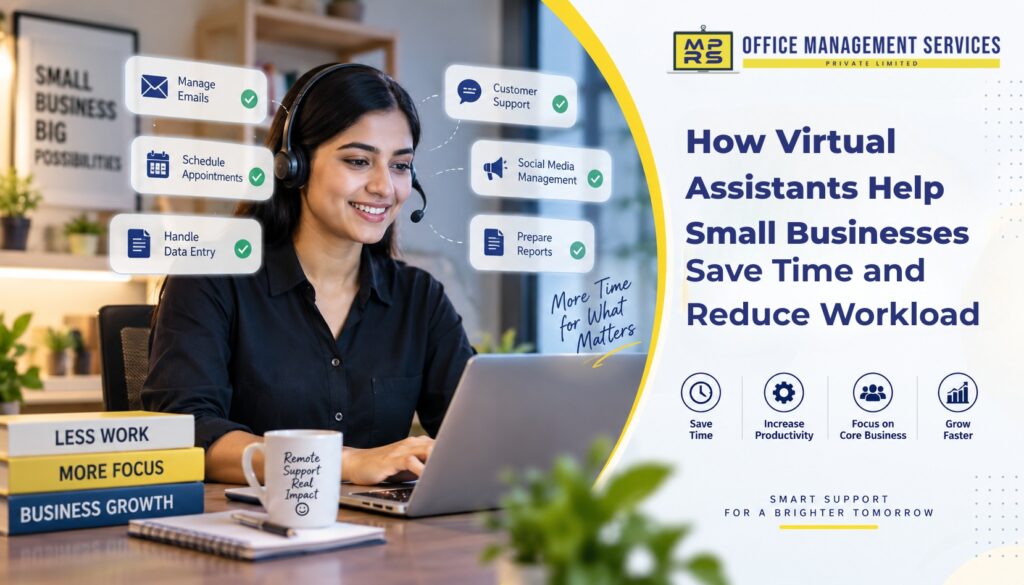
Running a small business often means managing many responsibilities at once. From answering emails and scheduling meetings to updating records and following up with customers, routine work can quickly fill the day A virtual assistant for small business can take care of many of these time-consuming tasks, giving business owners more time to focus on customers, strategy, sales, and growth. This is where a virtual assistant for small business can provide practical support. By delegating suitable administrative and operational tasks to a remote professional, business owners can reduce their workload and focus on activities that require their direct attention. What Is a Virtual Assistant? A virtual assistant is a professional who works remotely and supports businesses with administrative and operational activities. Depending on the needs of the business, a virtual assistant may manage emails, organize calendars, update spreadsheets, prepare documents, conduct online research, maintain records, or assist with routine customer communication. For small businesses, this flexibility can be valuable. Instead of spending hours managing repetitive work, owners can delegate suitable tasks and use their time more effectively. Why Routine Tasks Take Up Valuable Time Administrative work is an essential part of running a business, but it can quickly become time-consuming. Checking emails, arranging appointments, updating customer information, entering data, and organizing files may only take a few minutes individually. When these activities occur throughout the day, however, they can significantly reduce productivity. Frequently switching between administrative work and important business decisions can also make it difficult to concentrate. Delegating routine activities helps create a clearer division of responsibilities and allows business owners to focus on work where their experience adds the most value. How Virtual Assistants Help Save Time One of the main advantages of virtual assistance is reducing the number of routine tasks business owners need to manage personally. For example, a virtual assistant can organize an inbox, identify important messages, and manage routine responses according to agreed guidelines. Calendar management is another common area of support. Scheduling meetings can involve checking availability, communicating with different people, sending invitations, and handling changes. Delegating these activities can reduce interruptions throughout the day. The time saved can then be used for customer relationships, business planning, sales opportunities, and service improvements. Tasks You Can Delegate to a Virtual Assistant The responsibilities of a virtual assistant will depend on your business, but several everyday tasks can be handled remotely. Email and Calendar Management Virtual assistants can organize emails, flag priority messages, schedule appointments, send reminders, and maintain calendars. This helps business owners stay organized without constantly monitoring their inbox. Data Entry and Record Management Businesses regularly handle customer details, contact information, spreadsheets, forms, and other records. A virtual assistant can enter, update, and organize this information, helping keep business records accurate and accessible. Document Preparation Preparing reports, formatting documents, updating templates, and organizing digital files can consume valuable time. Delegating these activities helps maintain organized documentation while allowing internal teams to focus on higher-priority responsibilities. Online Research Businesses may need information about competitors, suppliers, potential customers, markets, or industry developments. A virtual assistant can collect and organize relevant information, giving business owners a useful starting point for further evaluation and decision-making. Customer Follow-Ups Consistent communication is important for maintaining strong customer relationships. Virtual assistants can assist with routine follow-ups, appointment confirmations, information requests, and other administrative communication based on the processes established by the business. Reduce Workload Without Losing Control Delegating work does not mean losing control over business operations. A practical approach is to identify which tasks require the owner’s expertise and which can be completed by someone else with clear instructions. Important decisions involving strategy, customers, or pricing may still require direct involvement. Routine activities such as updating records, organizing files, or scheduling meetings can often be delegated. Clear instructions, defined responsibilities, and regular communication help maintain visibility while reducing the amount of work owners need to handle themselves. Create More Time for Business Growth The real value of saving time is having more opportunities to focus on activities that move the business forward. Instead of spending several hours each week on routine administration, business owners can use that time to speak with customers, pursue new opportunities, improve services, build partnerships, or plan future growth. Delegation can also make the business less dependent on one person handling every process. As the company grows, having reliable support for recurring tasks can make daily operations easier to manage. Flexible Support for Changing Business Needs Small businesses do not always have the same workload. New projects, busy seasons, product launches, or increased customer enquiries can create additional administrative demands. Virtual support can adapt as those requirements change. A business may initially need help managing emails and records, then later require assistance with research, reports, documents, or other operational activities. This flexibility allows businesses to use support based on their current requirements rather than trying to manage every function internally. How to Work Effectively With a Virtual Assistant Start by identifying repetitive tasks that consume significant time but do not require your direct involvement. Provide clear instructions about what needs to be completed, when it is required, and how the work should be handled. For recurring activities, checklists and standard operating procedures can help maintain consistency. It is also useful to establish how tasks will be assigned, where files will be stored, and how progress will be communicated. Once the workflow is working effectively, additional responsibilities can be delegated gradually. Focus on What Matters Most Small business owners have limited time, and not every task requires their personal attention. Working with a virtual assistant for small business can help keep routine activities organized while creating more time for customers, planning, and business development. MPRS provides virtual assistant services for businesses that need reliable support with administrative and recurring operational tasks. Our team helps businesses reduce workload, stay organized, and make better use of valuable working time. Looking for reliable virtual assistant support? Contact MPRS to discuss your business requirements and discover how virtual assistance